
Water Damage Restoration Tips
Emergency Water Extraction vs. Water Mitigation: What's the Difference?
Published 2026-09-22 · By Mike Carter, Salt Lake City Water Damage Restoration
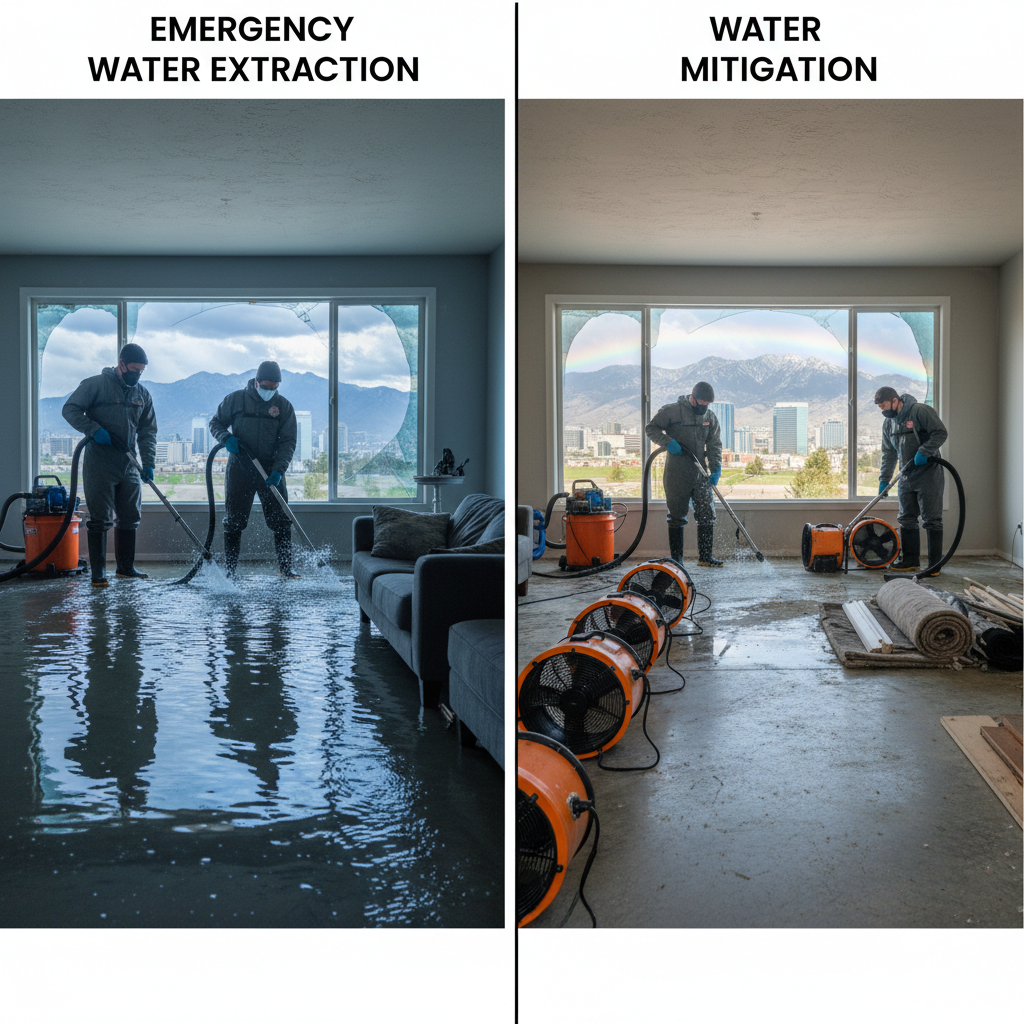
Living in Salt Lake City, you know that our semi-arid climate can turn unpredictable. The cold, snowy winters often lead to frozen pipes, while sudden thunderstorms can bring flash floods. With these risks, home and business owners must understand the difference between emergency water extraction and water mitigation. Both are vital in handling water damage, but they serve distinct purposes.
Water damage is not just a hassle; it can lead to serious structural issues, mold growth, and health risks if not addressed promptly. As Mike Carter, a restoration specialist with years of experience in Salt Lake County, explains, understanding these two services can save you a lot of time, money, and heartache.
What is Emergency Water Extraction?
Emergency water extraction is typically the first response after a water intrusion event in areas like Downtown Salt Lake City or Sugar House. This service focuses on swiftly removing standing water to minimize the damage. Cold winters can lead to burst pipes, and a quick response is essential. Here’s how the process works: 1. Assessment: The damage is evaluated to determine the best extraction approach. 2. Equipment: Heavy-duty pumps and vacuums are utilized to remove water. In circumstances like basement flooding after heavy snowmelt, these tools are indispensable. 3. Safety Protocols: Since flooded areas can pose electrical hazards, safety is priority number one. Restoration specialists will ensure power sources are shut off.
Following the extraction, properties might still retain moisture in walls and flooring, requiring subsequent steps like drying and dehumidification.
What is Water Mitigation?
Water mitigation goes a step beyond extraction. It encompasses the processes aimed at preventing further damage to your property. For example, after emergency water extraction, homeowners in neighborhoods like Liberty Wells or Rose Park may benefit from these mitigation steps: - Drying: Using industrial-grade dehumidifiers and fans to fully dry affected areas. This can prevent mold growth, an issue that plagues properties with moisture issues, especially during the humid spring runoff season. - Repairs: Addressing any structural damage, such as replacing drywall or flooring affected by water and preventing future water intrusion. Homes in Capitol Hill may see different repairs due to their age and construction styles. - Preventative Measures: Professional restoration teams will provide recommendations to avoid future incidents, such as improved drainage solutions or regular maintenance checks.
In essence, while extraction removes the immediate water threat, mitigation focuses on long-term solutions. Understanding when to initiate these services can significantly affect recovery outcomes.
Why Choose a Local Expert?
Choosing a local expert like Mike Carter for your water damage issues brings immense value. Local specialists understand the unique weather patterns and building styles of areas across Salt Lake City and Wasatch Front. For instance, homes in Glendale might be constructed differently than those near the University of Utah, affecting water damage repair strategies. Additionally, the local insight allows for tailored preventative measures based on the specific conditions of the property.
In conclusion, both emergency water extraction and water mitigation are critical during a water damage incident. When faced with water intrusion, it’s best to engage professional services to ensure comprehensive care and long-term protection. Whether you're in Poplar Grove or East Bench, swift action can prevent devastating effects on your property. If you're in a situation where you need immediate help, reach out for our Emergency Water Mitigation or Water Damage Removal services.
Need Water Damage Restoration in Salt Lake City?
Mon–Fri 8am–10pm, Sat 8am–10pm, Sun 8am–10pm
(801) 307-0578